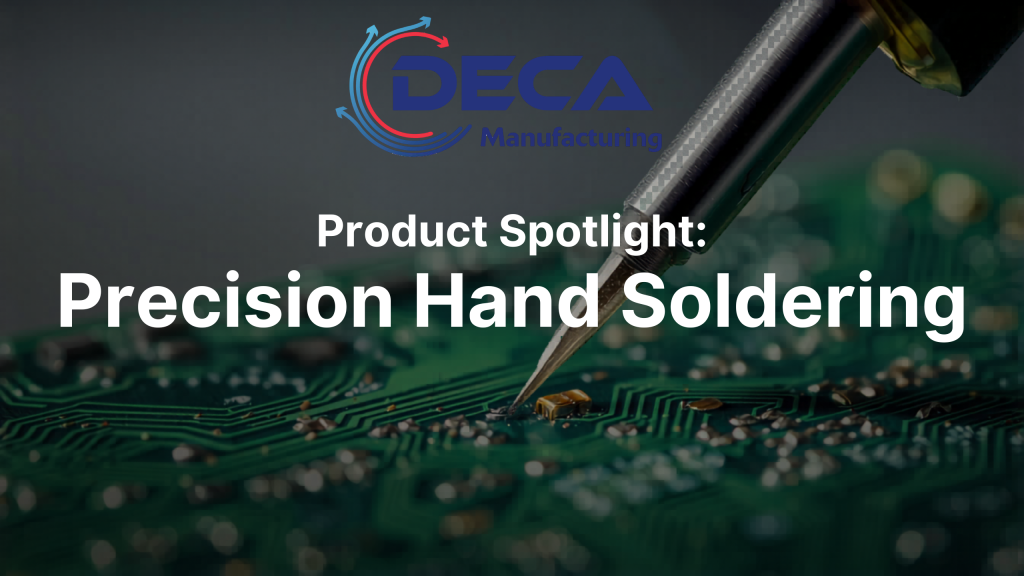
In industries where failure is not an option, every connection matters. From aerospace avionics and medical life-support equipment to military systems and automotive safety technology, wire harness and cable assembly reliability plays a critical role in overall system performance. That’s where Precision Hand Soldering comes in. Let’s take a closer look at precision hand soldering and how Class 3 J-STD standards help deliver the reliability, consistency, and long-term performance required in the most demanding applications. Read below to learn more!
What Is Precision Hand Soldering?
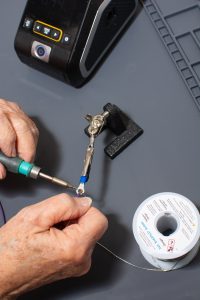
Precision Hand Soldering is the expert application of controlled heat, high-purity solder alloys, and industry-approved fluxes to create permanent electrical and mechanical interconnections within wire harness assemblies, cable assemblies, and electromechanical assemblies.
Unlike automated wave or reflow soldering, hand soldering offers greater flexibility for:
- Fine-gauge wires
- Complex routing
- Shielding terminations
- Custom splices
- Specialized configurations where crimping alone may not provide the required reliability or geometry
Every solder joint is carefully completed under magnification with precise temperature control to ensure:
- Complete wetting
- Proper fillet formation
- Strong electrical conductivity
- Zero thermal damage to insulation
The result is a durable, high-integrity connection engineered for long-term performance in harsh operating environments.
Built to IPC Class 3 Standards
At DECA Manufacturing, precision soldering services are performed in compliance with IPC J-STD-001 and aligned with IPC/WHMA-A-620 Class 3 requirements when specified by the customer. Class 3 represents the highest performance level for electronic assemblies, PCB assemblies, and wire harnesses. These standards are used in applications where continued performance is critical, downtime is not an option, and equipment may operate in extremely demanding conditions. Not every soldering application requires Class 3 criteria, but for customers operating in high-reliability industries, these standards provide an additional level of confidence and risk reduction.
Typical Class 3 applications include:
- Aerospace avionics
- Military and defense systems
- Medical life-support equipment
- Automotive safety systems
- Space and satellite hardware
Key Class 3 Requirements Include:
- Superior solder wetting and fillet geometry
- Strict process controls and limited rework
- 100% visual inspection under magnification
- Full traceability and documentation
- Zero tolerance for cold joints, voids, or insulation damage
Achieving Class 3 workmanship requires more than following a written standard. Operators performing Class 3 soldering must receive hands-on training, demonstrate proficiency, and successfully complete certification requirements to IPC J-STD-001 standards. At DECA Manufacturing, our soldering personnel are trained and certified to these requirements, helping ensure every solder joint is produced with the skill, consistency, and attention to detail required for high-reliability applications. Ongoing training and recertification help keep our operators at the forefront of industry best practices for high-performance electronics.
Precision, Reliability, Risk Reduction
At DECA, every solder joint is treated as a critical link in the final assembly. Precision hand soldering helps eliminate many of the most common wire harness failure points, including: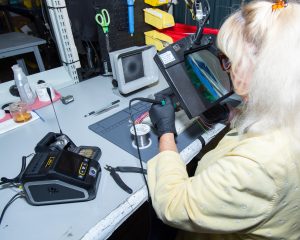
- Intermittent electrical connections
- Corrosion
- Vibration-related fractures
- Thermal stress failures
By combining experienced technicians, rigorous inspection processes, and high-quality materials, DECA delivers custom-manufactured assemblies designed to perform reliably in demanding real-world environments.
Industries & Applications
Not every wire harness application has the same requirements. In some industries, a failed connection might cause downtime or equipment repairs. In others, it can impact safety, mission success, or critical system performance. That’s why precision hand soldering remains an important part of custom wire harness manufacturing and cable assembly production for high-reliability applications. These wire harness assemblies can be found in everything from fighter jets and MRI machines to autonomous vehicles and advanced manufacturing systems. DECA’s soldered wire harness assemblies are used in a wide range of industries such as:
Aerospace & Defense
- Used in avionics, radar systems, military vehicle wiring, satellite interconnects, and precision-guided munitions, including GPS- and laser-guided systems. These applications require reliable electrical performance to support critical defense operations and the warfighter.
Medical Devices
- Supports life-support systems, diagnostic equipment, and other medical electronics where electrical reliability is essential to patient safety.
Automotive & Transportation
- Used in ADAS systems, braking systems, engine controls, and other safety-critical vehicle electronics.
Space & High-Reliability Electronics
- Used in launch systems, payload wiring, and ground support.
Industrial & Energy
- Ideal for robotics, process controls, automation systems, and commercial equipment operating in harsh-environments.
Advantages of Precision Hand Soldering
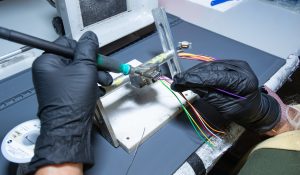
While crimping is often the preferred termination method for many applications, there are situations where hand soldering offers unique advantages. Complex assemblies, specialized conductor types, and demanding operating environments often require a level of precision that can only be achieved through skilled soldering techniques. When performed by trained technicians using proven processes, hand soldering can deliver reliable electrical connections that stand up to years of service. Some of the key advantages include:
Superior Joint Integrity
- Precision soldering provides exceptional electrical conductivity and mechanical strength while helping assemblies withstand vibration, wire fatigue, thermal cycling, corrosion, and harsh operating environments.
Ideal for Complex Assemblies
- Hand soldering allows technicians to work with fine-gauge wires, mixed conductor types, shielding terminations, and custom splices that may not be achievable through crimping alone.
Reduced Risk & Improved Reliability
- Class 3 workmanship standards combined with comprehensive inspection and testing help minimize the risk of failures caused by vibration, environmental stress, and other demanding operating conditions.
Full Traceability & Compliance
- DECA supports customer quality requirements through documented process controls, traceability, and compliance with standards including ISO 9001:2015 and ITAR requirements.
Long-Term Performance
- Optimized solder wetting and proper fillet geometry contribute to extended service life and dependable long-term operation.
Materials & Components
The quality of a soldered connection depends on more than just technique. Material selection plays a major role in the long-term performance of the finished assembly. From conductors and insulation materials to solder alloys and connectors, every component must be carefully selected to meet the application’s electrical, environmental, and reliability requirements. DECA uses materials designed to support consistent, high-quality results across a variety of industries and operating conditions, including:
- High-purity copper conductors
- PTFE, ETFE, and cross-linked insulation materials
- IPC-compliant solder alloys and fluxes
- MIL-spec terminals and connectors
- Heat-shrink tubing, braid sleeving, and shielding components
All materials are selected to support consistent performance and meet customer-specific application requirements.
Why Choose DECA Manufacturing?
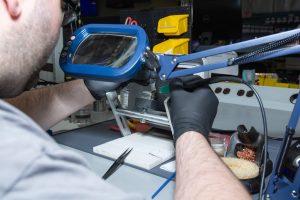 When reliability matters, experience and process control make a difference. At DECA, precision hand soldering is supported by documented quality systems, trained personnel, and manufacturing capabilities built around customer requirements. Whether you’re developing a prototype or scaling to production volumes, our team focuses on delivering wire harness assemblies that meet demanding performance expectations while maintaining full traceability and quality assurance.
DECA Manufacturing is:
- ISO 9001:2015 certified
- ITAR certified (Cage Code 0CA45)
- Experienced in IPC J-STD-001 and IPC/WHMA-A-620
- Equipped for 100% electrical testing and visual inspection
- Scalable from prototype through high-volume production
From custom engineering support to full material traceability, DECA helps customers build high-reliability assemblies with confidence.
Engineered for Connections That Matter
In critical applications, even a single compromised solder joint can lead to costly downtime, operational failure, or serious safety risks. Precision hand soldering built to IPC Class 3 standards helps ensure the reliability and consistency required in today’s most demanding industries. We don’t just solder wires; we engineer dependable connections designed for long-term performance. Our experienced team, IPC-certified operators, strict process controls, and commitment to quality help customers achieve the reliability their applications demand. Ready to discuss your next high-reliability wire harness project? Contact DECA Manufacturing to learn more about our precision soldering capabilities and custom wire harness solutions.