When designing wire harnesses and cable assemblies, selecting the right materials is critical to performance, durability, and overall product success. Below are key factors to consider when choosing wire.
Conductors
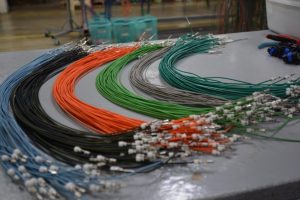
When people think of wire, copper often comes to mind. There are many conductor options used in cables and harnesses, including:
- Copper plated with metals such as nickel, tin, or silver
- Alloys such as beryllium copper, cadmium bronze, and alumel
- Fiber optic cable made from plastic or glass
Each material offers unique electrical and physical properties, making proper selection essential for your application.
Wire Gauge
Wire is available in a range of gauges (sizes), and selecting the correct gauge depends on:
- Power and/or data requirements
- Cable length
Lower gauge (larger diameter) wires carry heavier loads and are ideal for industrial applications. Higher gauge (smaller diameter) wires are better suited for smaller devices and precision equipment, such as medical instruments.
Insulation and Jacketing
Most wires include insulation, typically made from thermoplastic or thermoset materials.
Thermoplastics:
PVC (Polyvinyl Chloride), PE (Polyethylene), ECTFE, PVDF, Nylon
Thermosets:
XLPE, CPE, EPR, Neoprene
Thermoset materials are often used in high-temperature environments due to their durability and resistance to melting.
In addition to insulation, wires may include protective jacketing made from materials such as nylon, cotton, glass, Kevlar, or metal sheathing.
The right combination depends on environmental and performance requirements, including:
- Abrasion and tear resistance
- Flexibility (especially in low temperatures)
- Temperature stability
- Moisture resistance
- Chemical and oil resistance
- UV and weather resistance
Wire Configurations
Wire can be manufactured in a variety of configurations, including:
- Single conductor (single strand)
- Multi-strand (duplex, triplex, quadruplex)
- Multicore
- Ribbon cable
Processability
Lastly, how easy is it to process the wire? This simply means how easy/difficult will it be to cut, strip, and add the desired connectors to the wire. While it may not affect performance directly, it can impact production efficiency and cost.
For example:
- Can the insulation be easily stripped (e.g., with laser stripping)?
- Does the jacketing fray during processing?
- Is the material compatible with welding or potting processes?
Wire harnesses and cable assemblies serve as the “nervous system” of your product. Material selection should be based not only on cost, but also on application requirements, operating environment, and manufacturability. Looking for a partner to support your next project? DECA Manufacturing is known for being responsive, knowledgeable, and flexible. Contact us today to get started!