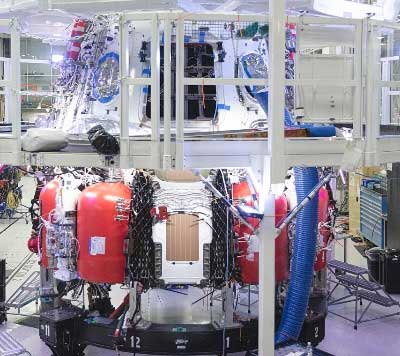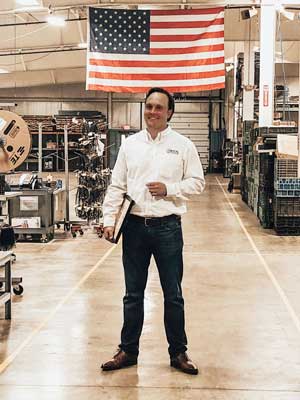
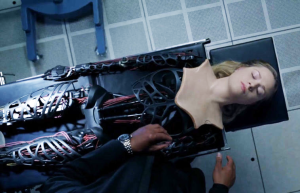
At DECA we love to think of our products in broader terms than simply wire harnesses or cable assemblies. We tend to think of them as a your final product’s central nervous system. While we build harnesses for many different purposes, the field of wearable technology is interesting and exciting. What would it be like if some of the stuff we see on Iron Man, the Avengers or WestWorld became real?

Initially many of these devices were typically made with a hard frame and motor gear mechanisms. These are referred to as HWR (short for hard wearable robots) in addition to the better known term: exoskeletons. As technology continues to evolve, softsuits or soft wearable robotics, aka SWR are gaining attention. These devices, are composed of softer materials, (including flexible PCBs) and are lighter, but less powerful. SWRs are made with shape-memory-alloy (SMA)-based fabric muscle (SFM) activated with a small motor or pneumatics.
The rapidly developing field of wearable robots is providing new ways for science fiction to become reality. Wearable robotics are becoming more and more common for both civilian and military purposes. Robotic devices are used to:
- support workers doing repetitive tasks and alleviate physical stress
- give soldiers enhanced endurance and strength
- allow those disabled by injury or disease to perform common functions such as walking, climbing stairs and other elements of ADL
- aid physical rehabilitation after surgery or injury
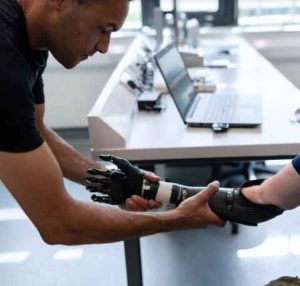
There are many robotics research projects around the world. One project, American Bionics, boldly proclaims that wheelchairs will be obsolete by 2035. Today’s softsuits and exoskeletons may have have sensors and wifi, but wire harnesses still play a vital role in their operation by:
- providing power to exoskeleton components
- managing hydraulic joints
- monitoring sensors that track the force applied by the wearer
- controlling motors that move joints and produce motion
- channeling data from sensors going to wifi/bluetooth transmission points
While these capabilities are exciting, some are also concerned about:
- technology being used to track activity and productivity, particularly in industrial settings
- the real cost and accessibility of these high tech wonders; a full-body exoskeleton can cost $40,000+
Do you have a wearable robotics project? Whether you need a prototype for your wearable’s nervous system or have a full production you need manufactured, we love working on projects like this.
- Call us: 419-884-0071
- Request a Quote
Want to learn more about robotics? Check out some of these links:
- Soft Exosuits: https://biodesign.seas.harvard.edu/soft-exosuits
- Exoskeleton Examples: https://builtin.com/robotics/exoskeleton-suit
- Move Over Ironman…: https://www.snexplores.org/article/iron-man-supersuit-real-exoskeletons
- IFA’s Best wearables of 2025: https://www.wareable.com/wearable-tech/best-wearables-in-show-ifa-2025